Indian Culture
Indian CultureIndia has a long history with many different traditions and cultures. Learn interesting facts about life in India and be inspired.
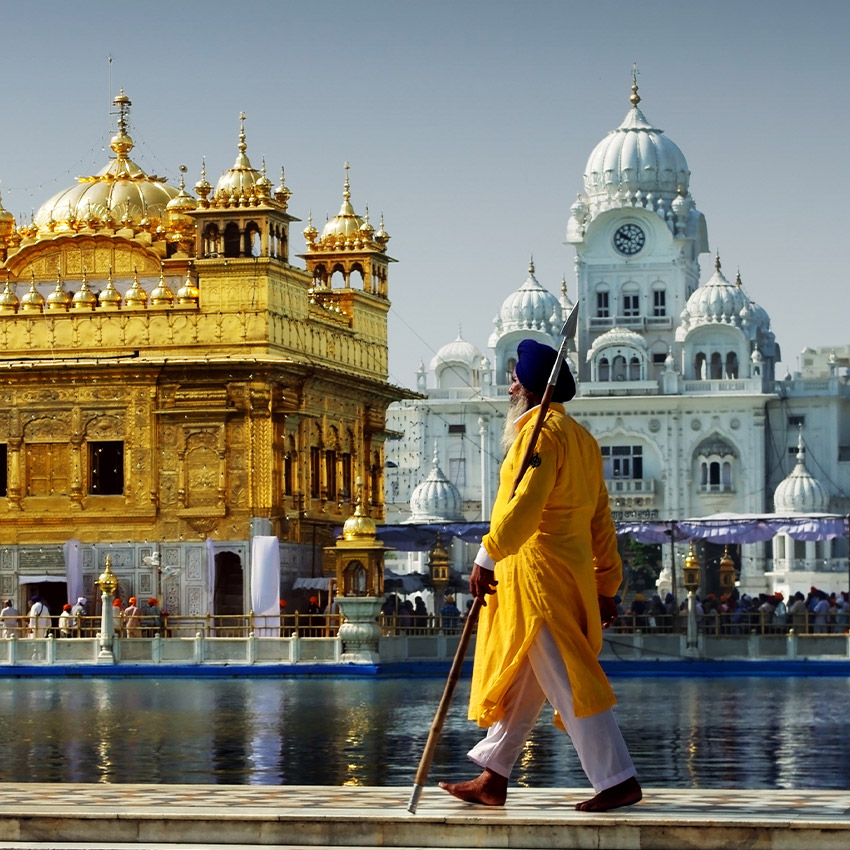
India has a rich cultural history that varies greatly across the country: India, now the world's most populous country, covers an area of over 3.2 million square kilometers and is home to many different traditions and cultures.
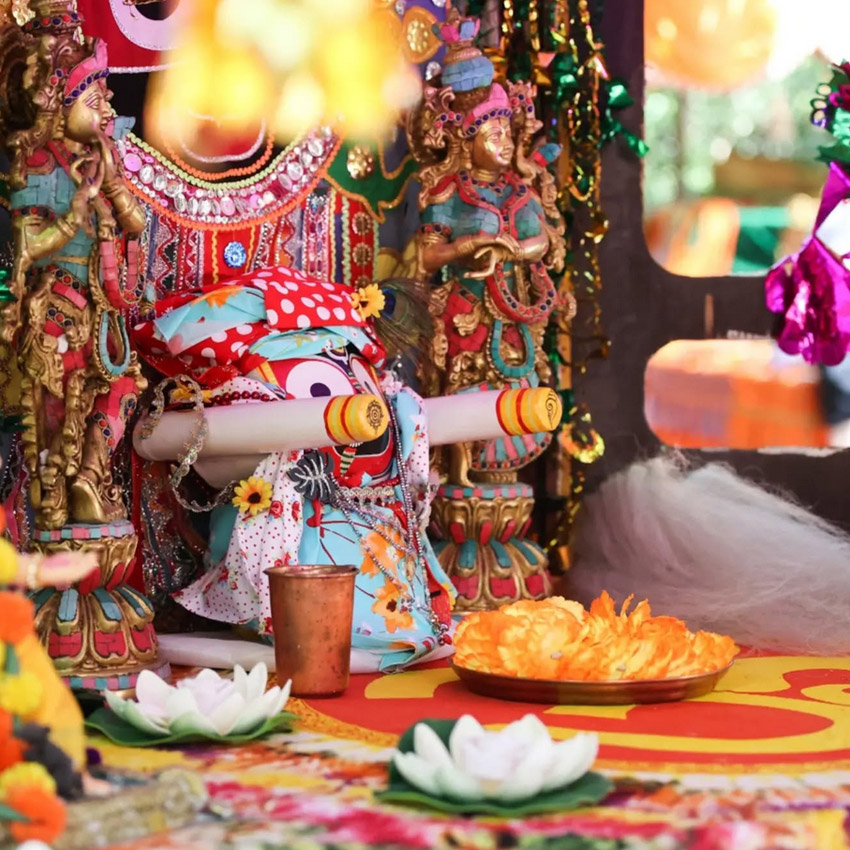
It is difficult to separate cultural life in India from spirituality or religion. It is home to some of the world’s oldest religions and plays a central role in the spread of many religious traditions. Among others, Hinduism, Buddhism, and many traditional indigenous religions are practiced in India.
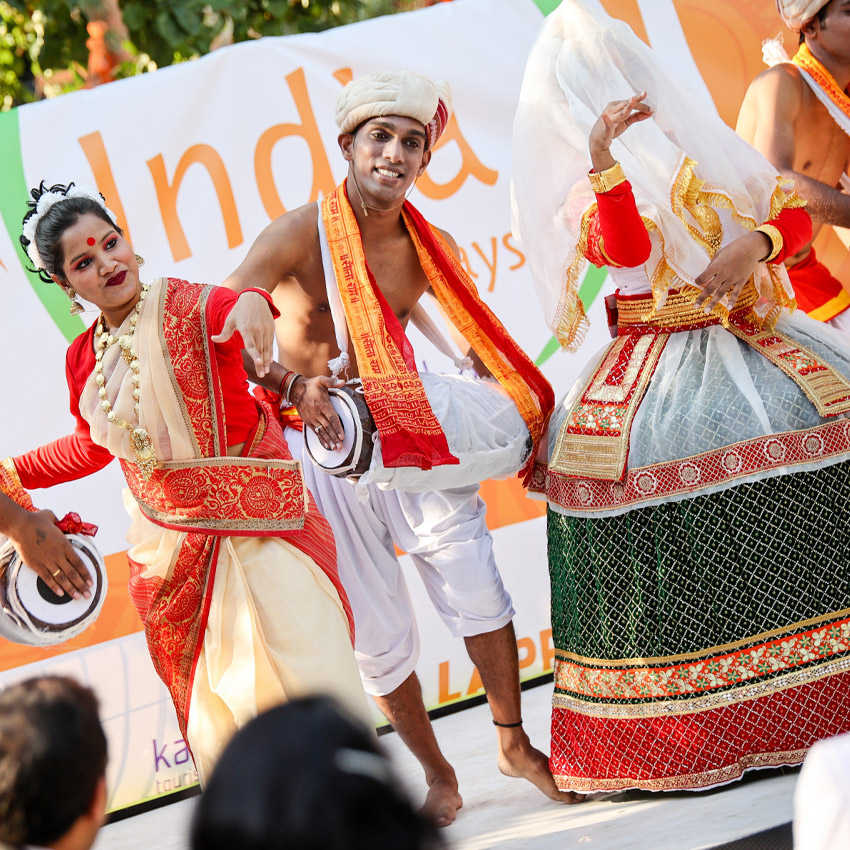
Clothing in India is very diverse and depends on various factors such as region, social group, climate, and tradition.
- Sari
A traditional wrap skirt for women (up to 7 meters long) with a shoulder shawl. - Choli
A traditional short-sleeved, crop-top blouse to wear with a sari. - Dhoti
A traditional Indian garment for men. It consists of a long piece of fabric that is tied at the waist and then wrapped around the legs like pants. - Lungi
This is a wrap skirt traditionally worn by men. - Kurta
A collarless shirt with a loose fit, usually worn by men. It is the men's version of the kamiz. - Salwar Kamiz
It is a hip-length shirt for women that is worn over pants; depending on the region, it is also worn with a dupatta. - Dupatta
A long scarf worn over the shoulder (Punjabi dress).
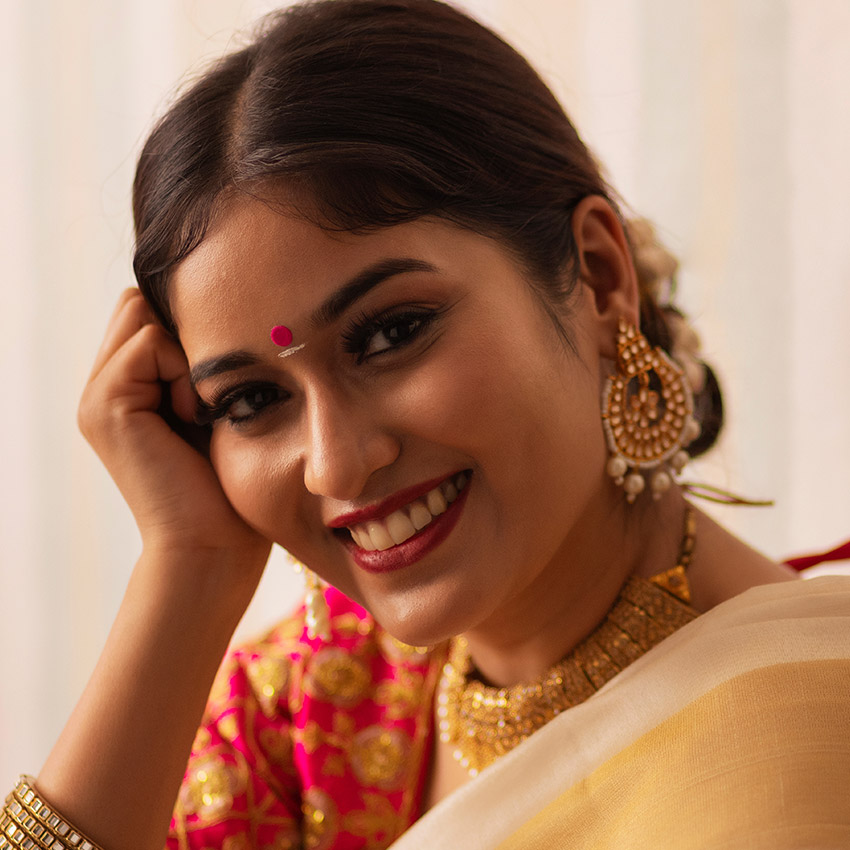
A bindi is a dot painted on the center of the forehead between the eyebrows, or a decorative sticker placed there, where the energetic “third eye” is believed to be located. Traditionally, the dots are applied with red powder as a sign that a woman is married. By the way: Unmarried women can also wear a bindi; in that case, it serves as a decoration or a symbol of blessing.
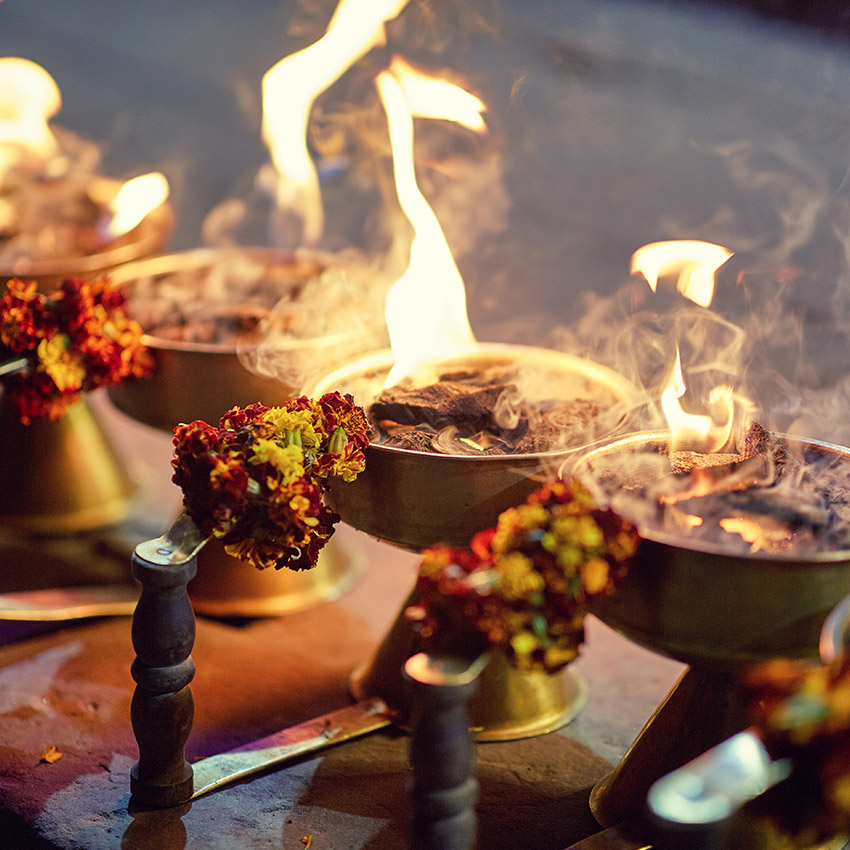
Even though Europeans are generally unfamiliar with the many rituals of Hinduism—both large and small—this ceremony connects people with the universe. Gratitude and humility expressed during the “Arati-puja” fire ceremony are meant to resonate with the gods, thereby having a positive effect on life.
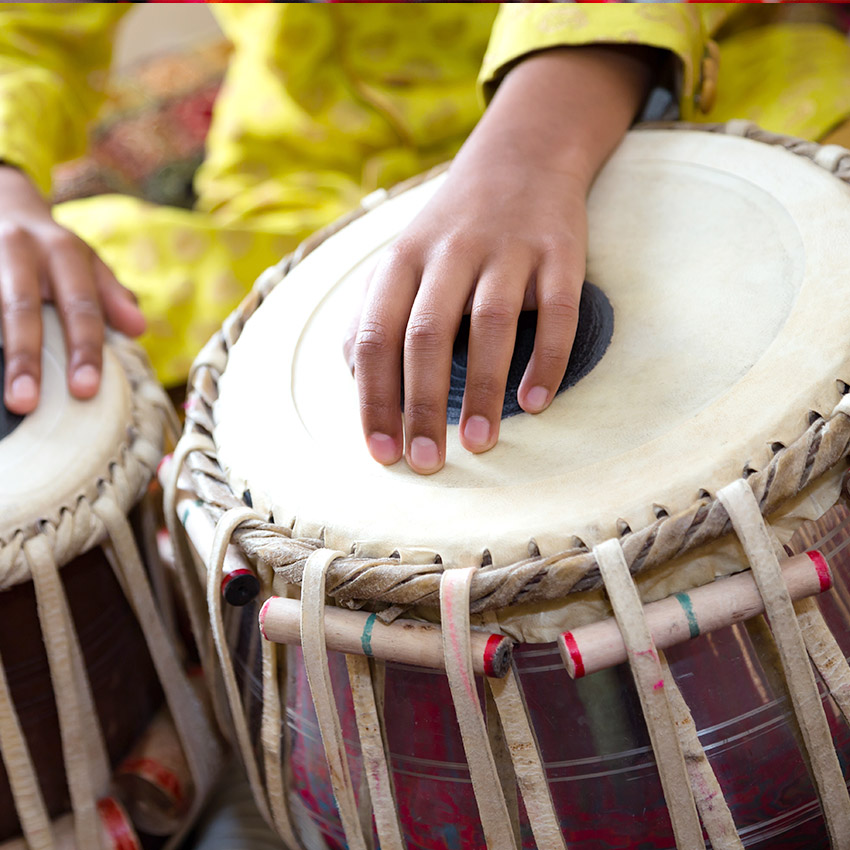
The tabla is a classical percussion instrument in Indian music. It consists of two small drum shells, each with a distinctive circular hole in the head, and is played with the fingers and hands. The tabla, which is used in classical, folk, and religious music alike, has a wide range of sounds.
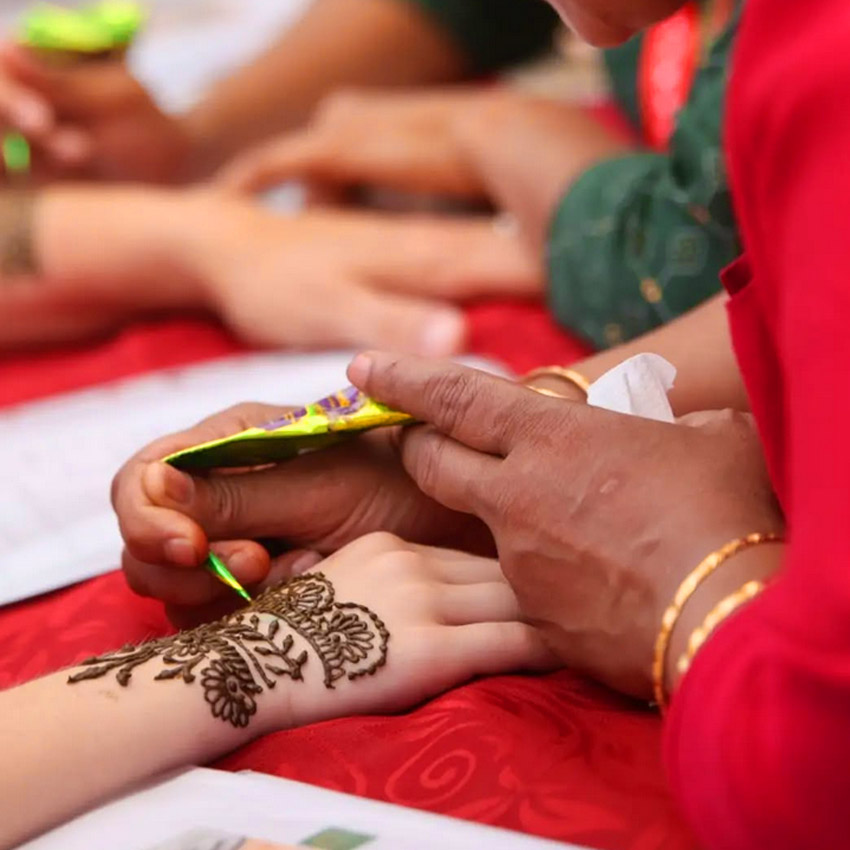
Traditional, artistic, ornamental body painting with henna—which originated primarily in northwestern India—is known as mehndi and is generally believed to bring good luck and health. Incidentally, henna is a green powder that is mixed with water to form a dark paste. After application, the paste is left to set. The red markings remain visible for about two weeks.
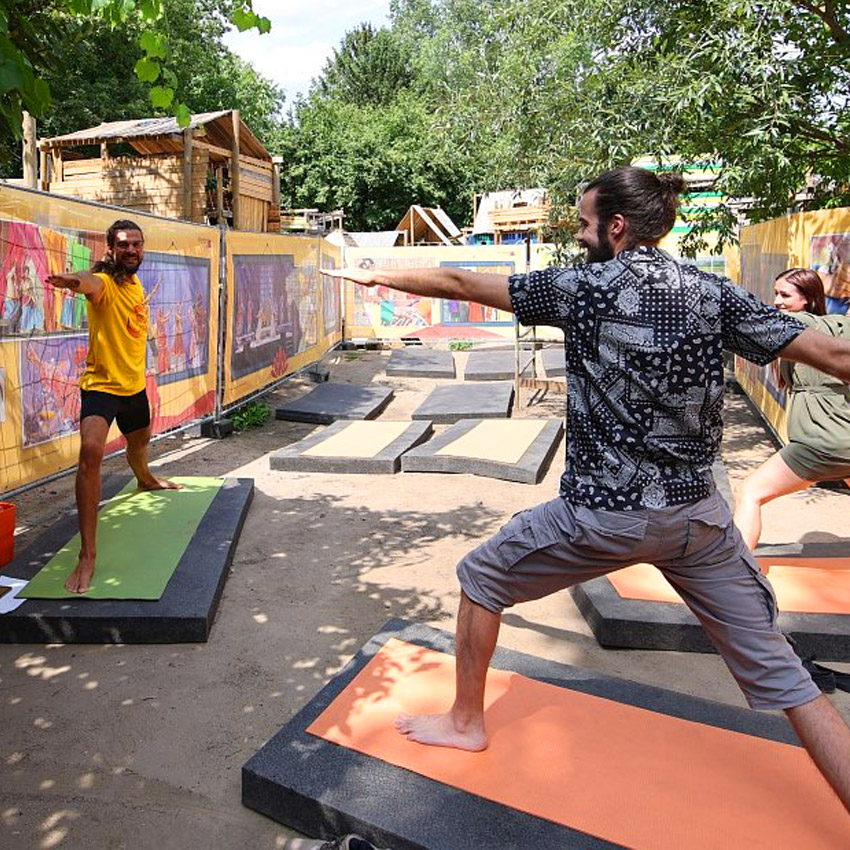
Yoga is a philosophical tradition originating in India that encompasses a series of mental and physical exercises or practices—and is simply a part of life. It is about the path to self-knowledge, becoming one with consciousness—whether through asanas, kriyas, niyamas, or pranayama—for which Hinduism offers many names for the various paths. Incidentally, these are also adapted thematically according to one’s individual disposition.
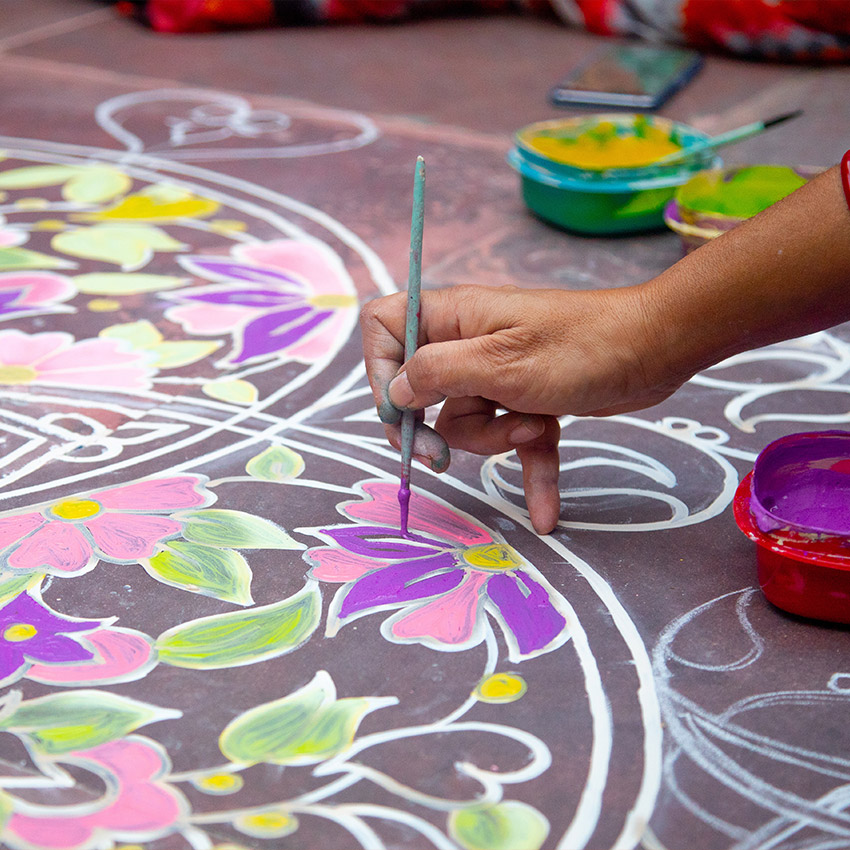
This is a unique Indian art form in which these colorful patterns are created on the floor as good-luck charms. They reflect tradition and are created for special occasions and celebrations. These patterns are also often seen at the entrances to buildings. Incidentally, the most important elements of a rangoli are its colors and auspicious symbols, which play a central role in the design.
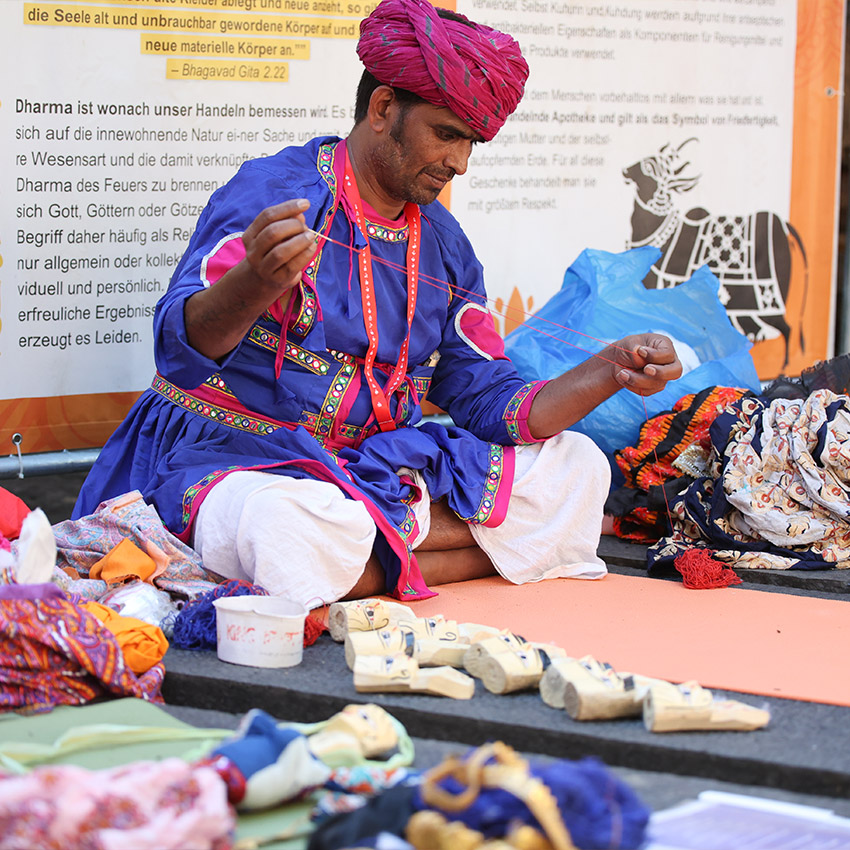
Puppetry is said to have originated in India as early as 1000 B.C. Furthermore, almost every type of puppet found in India is used in this form of storytelling. Over the centuries, puppetry has come to occupy an important place in traditional entertainment.
Incidentally, as in traditional theater, the themes in puppet theater are usually based on epics and legends. Even the ancient Hindu philosophers—in the Bhagavad Gita—paid great tribute to puppeteers, comparing God to a puppeteer and the universe to a puppet stage. The entire universe is, in a sense, controlled by three threads: “Satta,” “Raja,” and “Tama.” Whether it’s Kathputli string puppets in Rajasthan, Ravanachhaya shadow puppets in Odisha, Putul Nautch rod puppets in West Bengal, or Pavakoothu hand puppets in Kerala: puppetry has long held a firm place in Indian culture as an art form—one with a philosophical essence. Whether dance, ball games, equestrian arts, or acrobatics